ULT College Football Coach
- 4.3
- Rating
- 50.00K
- Installs
- Free
- Price

 Analysis by App-foxy
I approached ULT College Football Coach expecting a management game built around the familiar fantasy of taking charge of a college football program. That is exactly the central idea, but the appeal is less about flashy presentation and more about the steady mood of running a team, making choices, and watching a season take shape. It is a free sports game from Games2rk, aimed at players who enjoy responsibility and long-term progress more than quick arcade action.
My first impression was that this is a game for people who like the role behind the match. You are not simply trying to win one play and move on. The attraction comes from thinking like a coach: weighing decisions, accepting that a promising season can become complicated, and trying to build a program that feels stronger over time. The college setting gives those choices a clear identity instead of making the game feel like an interchangeable sports simulator.
The game is available for everyone, and its Android requirement begins at version 7.0, which makes it approachable for many older devices. Its current version is 1.3.0, and the title has already passed 50 thousand installs. A 4.3 average from around 1.1 thousand ratings suggests that the basic coaching concept is connecting with its audience, although the experience will depend heavily on whether you enjoy management decisions more than direct on-field control.
You May Also Like

 Blood Strike: 2.5 Anniversary
Blood Strike’s Loadouts Turn Every Drop Into a Tactical Gamble
A close look at Blood Strike’s custom loadouts: how fast access to signature weapons reshapes its battle royale rhythm, rewards preparation, and narrows the gap between fights.

 Pandora - Music & Podcasts
Pandora’s Music Is Easy to Start, but Harder to Recover
Pandora’s strength is its low-effort path from a seed to a station. Its weak spot is how much confidence it asks you to place in connection, setup, and quiet recovery.

 8 Ball Pool
 Is Built on Rivalries, Rematches, and Routine
A close look at the rivalries, rematches, shared routines, and unanswered safety questions that turn a quick pool match into a persistent mobile community.

 Samsung Music
’s Quiet Strength Is Playing What You Already Own
Its reach comes less from spectacle than from dependable access to a personal library. That simplicity is both the app’s strongest retention engine and its ceiling.

 AccuWeather: Weather Radar
AccuWeather Review: A Quick, Clear Forecast for Everyday Decisions
For everyday plans, the best forecast is the one you can understand quickly. AccuWeather makes rain timing, radar, and local conditions easy to act on, with a few trade-offs.

 Hill Climb Racing
Why Hill Climb Racing Still Turns Crashes Into One More Run
A tiny car, a bumpy hill and one more upgrade: Hill Climb Racing keeps resurfacing because its simple chaos makes every near-miss feel personal.
More From Our News Desk



How the college setting shapes the first impression
The strongest early choice is the setting itself. College football carries a different feeling from a professional league: there is a sense of building a tradition, developing a program, and trying to turn potential into results. That gives the game a more personal scale. I found it easier to care about the direction of a team when the goal felt like creating a legacy rather than simply collecting victories.
This setting also helps the game establish its playable mood. The idea of leading a college program to glory is not just a decorative theme; it frames every decision as part of a larger story. A strong result feels like progress for the program, while a poor stretch can feel like a warning that the plan needs adjusting. That kind of context is useful because management games can otherwise become lists of menus without emotional weight.
The presentation appears designed to support that role-playing perspective rather than compete with it. I would not choose this game expecting the visual spectacle of a major console football release. Its identity is closer to a focused coaching experience, where the atmosphere comes from the situation you are managing. That restraint works when you want to think, compare options, and let the consequences develop at your own pace.
One practical advantage is that the college theme gives casual sessions a natural stopping point. I can make a few decisions, review how the program is progressing, and put the game down without feeling that I have abandoned a real-time match. That makes it a sensible companion for a short break, a commute, or an evening when I want something interactive but not exhausting.
A world communicated through purpose rather than spectacle
The world of the game is communicated mainly through the role you occupy. You are encouraged to see the program as something that needs direction, not merely as a collection of players or fixtures. That point of view is important because it changes how I read the interface: a result is not only a result, but part of a wider attempt to establish a winning identity.
I also like that the setting gives the game a clear emotional vocabulary. Ambition, pressure, patience, and recovery all make sense in a college coaching story. Even when the underlying action is presented through management screens, the context encourages me to think in seasons and phases instead of isolated moments. That is one of the title’s more effective atmospheric decisions.
There is a trade-off, though. Players who want a richly simulated college universe may find the experience more focused than expansive. The setting creates a strong frame, but it does not automatically provide the depth of a full sports-management suite. If you are looking for a huge database, elaborate presentation, or a detailed off-field ecosystem, a larger alternative may suit you better.
For me, the better way to approach it is to treat the college identity as a lens for the coaching decisions. The game is at its most convincing when I accept that its pleasure comes from guiding a program through uncertainty. It is less convincing if I judge it by the standards of a broadcast-style football game.
Sound, pacing, and the feeling of a coaching season
Sound and rhythm matter in a management game because they determine whether the menus feel like part of the experience or merely a barrier between decisions. Here, the overall mood benefits from a pace that lets me consider what I am doing. The game does not need constant visual noise to create tension; the pressure comes from knowing that a choice may influence the direction of the program.
I found that slower rhythm helpful when reviewing a situation before committing to it. Instead of rushing from one screen to the next, I could approach the game as a series of coaching moments. That makes it easier to play thoughtfully, especially when I am trying to understand why a season is moving in a particular direction rather than tapping through everything as quickly as possible.
The sound design serves the experience best when it reinforces that sense of progress and occasion without overwhelming the management layer. I would not describe the audio as the main reason to install the game. Its more important contribution is tonal: it helps the title feel like a sports environment rather than a bare spreadsheet. The atmosphere remains centered on the program and its journey.
Pacing is also where the game can divide players. If you prefer immediate control, constant action, and a visible reward after every short interaction, the coaching rhythm may seem restrained. I enjoyed having room to think, but I can see why someone looking for an arcade football game would lose interest. This is a deliberate difference, not a flaw that can be solved by faster tapping.
Why the rhythm works for short and long sessions
In everyday use, I can imagine opening the game during a short break to handle a small part of the program, then returning later when I have more attention available. That flexibility is valuable because it does not force every session to become a full evening commitment. The same structure can support a quick check-in or a longer attempt to understand the direction of a season.
A useful habit is to avoid making decisions purely because the game presents them in sequence. I get more from the experience when I pause and ask what I am trying to improve: immediate results, longer-term stability, or the identity of the program. That small change in approach makes the game feel more strategic and prevents the interface from turning the experience into routine clicking.
The pacing also makes failure easier to examine. In a fast match, a mistake can disappear into the next possession. In a coaching game, a disappointing outcome invites reflection. I can look back at the choices that led there and decide whether to correct the plan or stay patient. That is one of the more satisfying parts of the title, provided I am willing to accept that progress may not feel instant.
Where the mechanics fit the atmosphere
The central mechanical fit is clear: the game turns the fantasy of being a college coach into a sequence of management decisions. That gives the setting practical meaning. I am not simply looking at a college-themed menu; I am using the role to interpret what happens next. The mechanics and atmosphere support each other when the game asks me to think about the health and direction of the program.
What I appreciate most is the sense of ownership. A coaching game gives me room to feel responsible for outcomes, even when I cannot control every moment directly. That makes success feel earned through judgment rather than reflex. It also creates a different kind of tension: I may understand the goal, but reaching it requires accepting trade-offs and living with imperfect results.
The game is best suited to players who enjoy planning, gradual improvement, and sports stories that develop over time. It is not the right choice if your definition of football gaming requires direct player movement, detailed play-by-play control, or an emphasis on manual skill. In those cases, a traditional action-focused football title will provide a more immediate connection to the field.
There is also a useful distinction between this game and a broad professional sports manager. ULT College Football Coach has a narrower identity, and that focus can make it easier to understand what you are meant to care about. The college program is the anchor. A larger management alternative may offer more systems and more depth, but it can also feel less approachable when you only want to experience the coach’s journey.
Practical ways to get more from the decision-making
My first tip is to set a clear priority before making several choices in a row. Decide whether this stage is about building momentum, protecting consistency, or recovering from a setback. Without that focus, it is easy to treat every option as equally urgent. A simple priority makes the season easier to read and helps reveal which decisions actually support the program’s direction.
My second tip is to judge progress over a run of results rather than one isolated outcome. The game’s coaching mood works better when I allow a plan time to show its value. Reacting to every setback can make the program feel directionless, while refusing to change anything can be just as damaging. The interesting balance is knowing when patience is sensible and when a poor pattern requires intervention.
A third insight is that the game rewards players who separate emotional disappointment from useful information. Losing can tempt me to change everything immediately, but that may hide the real cause of the problem. I get better results when I identify what changed, consider whether the issue is temporary, and then make a measured adjustment. That workflow turns the game from a sequence of wins and losses into a more engaging coaching exercise.
It is also worth considering the cost model before committing to a long play session. The game is free to download, but it includes optional in-app purchases ranging from $0.99 to $39.99 per item. I would approach those purchases carefully and first decide whether the core coaching loop holds my attention without spending. For a player who enjoys gradual progress, keeping the experience free may be part of the challenge; someone seeking faster advancement should understand that optional spending can change the pace.
Who will enjoy it, and who should choose another football game?
I would recommend this title to someone who likes the idea of being responsible for a team without needing to control every player directly. It is especially appealing if you enjoy sports management, seasonal progress, and the emotional arc of turning a college program into something stronger. The college setting gives the decisions a personality that a generic team-management game might lack.
It is also a good fit for players who want a game that can be played in thoughtful bursts. The pacing does not demand the same concentration as an action match, and the coaching perspective gives short sessions a purpose. You can return to the program, evaluate its situation, and make a meaningful decision without needing to complete a long real-time contest.
I would skip it if you mainly want realistic on-field simulation, cinematic presentation, or a large collection of licensed-style details. I would also look elsewhere if management menus usually feel like work to you. The game’s appeal depends on finding satisfaction in planning and accepting that the most interesting payoff may come after several decisions rather than immediately.
Compared with a standard football action game, this experience trades physical control for responsibility. Compared with a more expansive sports manager, it offers a more focused college-coach fantasy. That middle ground is its strongest position. It can introduce a casual sports fan to management ideas without requiring the scale of a huge simulator, while still giving experienced strategy players a distinct setting to explore.
The age rating of Everyone makes it easy to consider for a broad audience, but that does not mean every player will enjoy the same parts. Younger or casual players may appreciate the straightforward goal of building a successful program, while experienced managers may want more layers than this focused format provides. I see it as an accessible coaching game first, not a definitive replacement for every type of football title.
My verdict on the atmosphere and the coaching loop
ULT College Football Coach succeeds when its art direction, sound, setting, and pacing are judged as support for the coaching role. The college environment gives the game its character, the measured rhythm leaves space for decisions, and the management mechanics make the idea of building a program playable rather than merely decorative. I came away feeling that the title understands the mood it wants to create: thoughtful, competitive, and focused on progress.
Its limitations are tied to that same focus. Players searching for direct football action may find the experience too removed from the field, while dedicated management fans may eventually want a broader and deeper simulation. The optional purchase range is another reason to play with a clear idea of what kind of progression you want. I would not spend simply to hurry through a game whose main pleasure is watching a plan develop.
For the right player, though, the compact identity is a strength. Games2rk has built a sports title around a specific fantasy rather than trying to satisfy every football audience at once. I like it most as a calm but purposeful game for short coaching sessions, reflective decisions, and the gradual satisfaction of guiding a college program toward a stronger future.
My recommendation is simple: try it if the phrase “college football coach” sounds more appealing to you than “football player.” Give the decisions time to breathe, keep an eye on the direction of the whole program, and treat setbacks as information instead of instant failure. If that style of play matches you, the free entry point makes it easy to explore. If you need constant action, a field-level football game will be the better choice.
FAQs for ULT College Football Coach
01What is ULT College Football Coach?
ULT College Football Coach is a college football management and simulation game focused on building a successful program from the ground up. Instead of controlling players directly during every play, you take responsibility for coaching decisions, recruiting, roster development, tactics, and long-term team planning. It is designed for users who enjoy strategy, progression, and the challenge of running a football program.
02How does gameplay work in ULT College Football Coach?
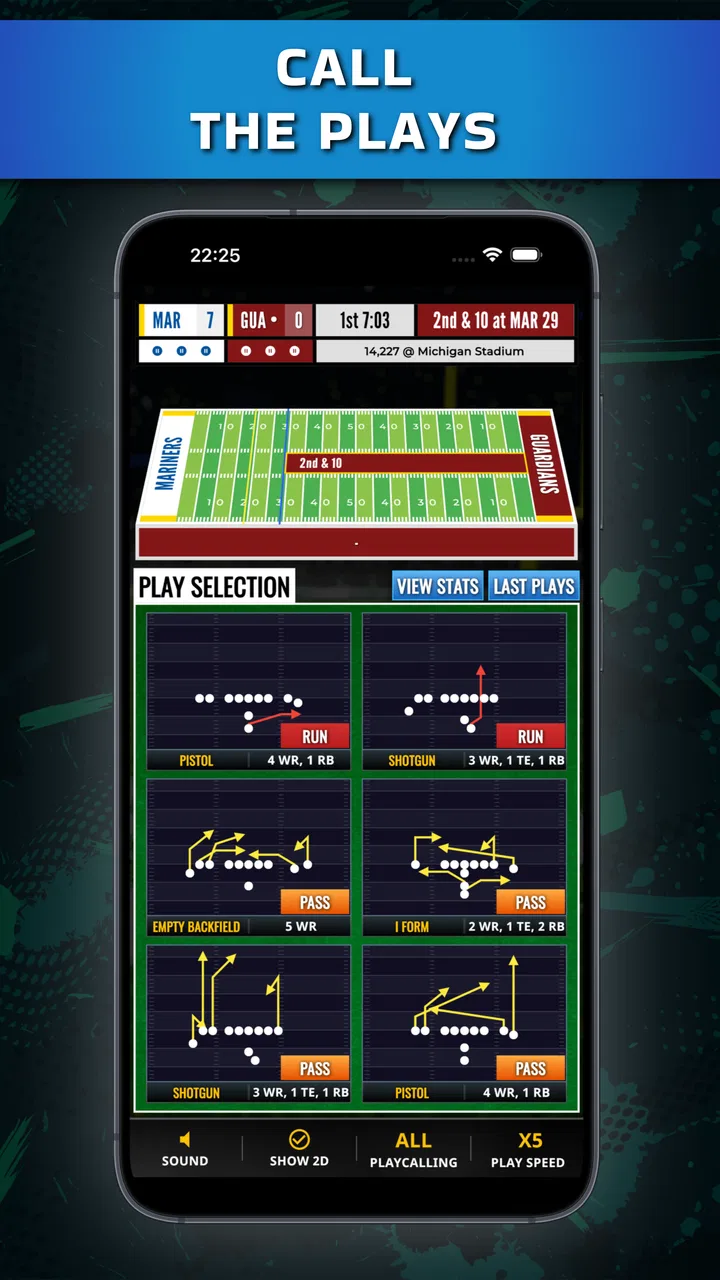
Gameplay centers on making decisions that influence your team’s performance over an entire season. You may need to manage recruiting, select strategies, develop athletes, prepare for opponents, and make adjustments as your program evolves. The experience is more about coaching and administration than arcade-style action, so patience and thoughtful planning are important for players who want consistent success.
03Is ULT College Football Coach free to download and play?
The app may be available as a free download, but users should check the current store listing for details about optional purchases, advertisements, or premium features. Depending on the version and platform, some content or progression elements may require payment. Reviewing the in-app purchase information before downloading is recommended, especially if the game will be used by children or on a shared device.
04Does ULT College Football Coach require an internet connection?
Internet requirements can vary according to the version of the game and the features being used. Basic coaching or season gameplay may work without a constant connection, while updates, account-related functions, advertisements, cloud saves, or online features may require internet access. It is best to launch the game once while connected and review its permissions and settings before relying on offline play.
05Who will enjoy ULT College Football Coach the most?
ULT College Football Coach is best suited to football fans who enjoy management games, statistics, recruiting, and making decisions that produce results over time. It may appeal less to players looking for direct, real-time control of every athlete on the field. Newcomers should expect to learn the game’s systems gradually, while experienced sports-management players will likely appreciate its strategic focus and long-term progression.
Pros
- Deep recruiting and roster management options
- Season progression feels rewarding for long-term players
- Clear stats help guide strategic decisions
- Runs smoothly on most modern mobile devices
- Good choice for fans of college football management sims
Cons
- Limited appeal if you prefer direct on-field gameplay
- Some features may take time to learn
- Progress can feel slow without regular play
- Visual presentation is fairly basic
- The experience may become repetitive over longer saves

ULT College Football Coach
Gallery